Seersucker vs Gingham: What's the Difference?
Seersucker is a puckered cotton weave; gingham is an evenly woven check. Here is how they differ in feel, care and use, and how to choose for your range.
Fabric By Shal · 12 November 2026 · 4 min read
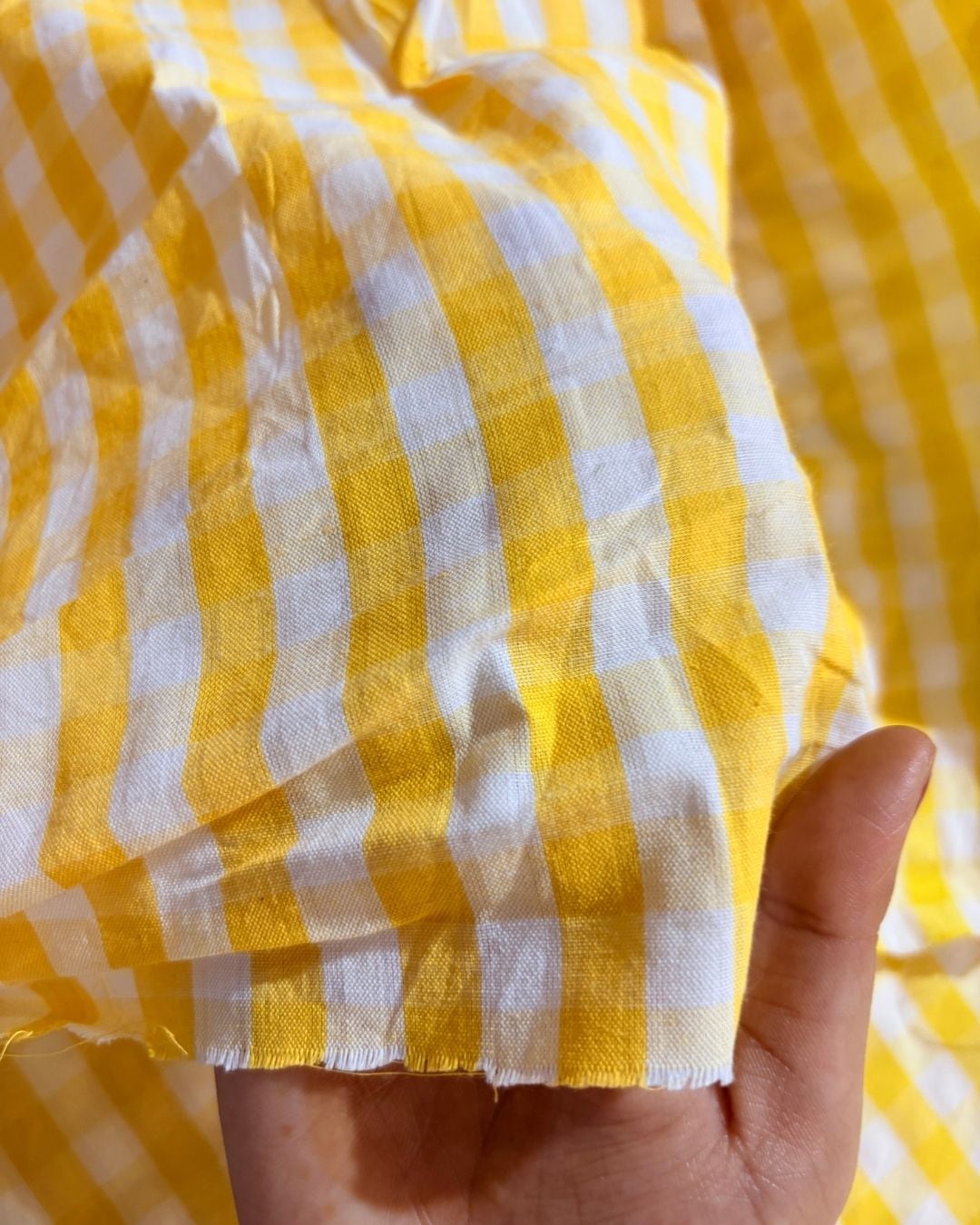
Seersucker and gingham are two of the most asked-about summer fabrics, and they are often confused because both come in fresh checks and stripes. They are not the same thing. Seersucker is a way of weaving the cloth; gingham is a pattern. Knowing the difference helps you pick the right fabric for the garment, the season and the price point.
What is seersucker?
Seersucker is a lightweight fabric with a crinkled, puckered surface. The puckers are woven in, not pressed in: some warp threads are held loose while others are held tight on the loom, so the loose ones bunch up into ridges. The result is a cloth that sits slightly away from the skin, lets air move, and looks fine without ironing.
The name is usually traced to the Persian words for "milk and sugar", a nod to its smooth and rough stripes side by side.
What you notice when you hold it:
- Texture: a raised, bumpy feel you can see from across a room.
- Weight: light. Our seersucker range is cotton at about 100 to 120 GSM.
- Care: the puckers hide creases, so it is a good choice for travel and children's clothes.
- Looks: stripes and checks, from fine to wide.
What is gingham?
Gingham is a checked pattern made by weaving coloured yarn and white yarn in both directions of a plain weave. Where two coloured threads cross you get the darkest square, where a coloured and a white thread cross you get the middle tone, and where two white threads cross you get white. Because the colour is in the yarn, the check is the same on both sides and does not fade the way a print can.
What you notice when you hold it:
- Texture: flat and smooth, unless it is a seersucker gingham (more on that below).
- Fibre: cotton or a polycotton blend. Most of our gingham is polycotton.
- Check size: from mini checks to large checks; the bigger the check, the bolder the look.
- Looks: crisp, tidy and classic.
Can a fabric be both?
Yes. A seersucker gingham is a gingham check woven with the puckered seersucker technique, so you get the classic check with the crinkled texture. Several fabrics in our seersucker range are exactly this, for example our red and white gingham seersucker check.
Seersucker vs gingham at a glance
- What it is: seersucker is a weave; gingham is a pattern.
- Surface: seersucker is puckered; plain gingham is flat.
- Feel in heat: seersucker breathes very well because it stands off the skin; cotton gingham breathes well too, polycotton gingham a little less.
- Ironing: seersucker needs almost none; polycotton gingham resists creasing; cotton gingham creases more.
- Best for: seersucker suits relaxed summer shirts, dresses, nightwear and kidswear; gingham suits crisp shirts, uniforms, table linen and cushion covers.
Cotton or polycotton?
Our seersucker is cotton. Our gingham checks and stripes are mostly polycotton, a blend of polyester and cotton. A blend holds its shape, creases less and keeps its colour well through many washes, which is why it is popular for uniforms, school wear and table linen. Pure cotton feels softer and breathes a little better against the skin. Choose by what matters more for the garment: easy care or natural feel.
Width matters for cutting too. Our fabrics come in 44 inch and 58 inch widths; a wider fabric often lets you fit more pattern pieces across the cloth.
How to choose for your range
- Think about the season. For peak summer and humid weather, seersucker is hard to beat.
- Think about care. For garments that are washed often and should look neat, polycotton gingham is a safe choice.
- Think about the look. Want relaxed and textured? Seersucker. Want crisp and classic? Gingham.
- Feel it first. Colour and texture are hard to judge on a screen.
Order a free swatch first
Every fabric in our catalogue has a free swatch; you only pay the shipping. Feel the puckers of the seersucker next to the smooth polycotton gingham before you decide. When you are ready, buy by the metre with no minimum, or in bulk from 100 metres for production runs.
Browse seersucker fabrics, browse polycotton fabrics, or ask us a question.
- Seersucker
- Gingham
- Buying guide